
I bought something labelled a monokini in a beach shop in Portugal and spent the next ten minutes working out what I had actually bought. The word has drifted a long way from what it originally meant, and the confusion is now baked into every rail in every resort.
Today, monokini is a commercial label for a one-piece swimsuit with cutouts, usually at the waist or the sides, sitting somewhere between a two-piece and a classic maillot. Historically it meant something else entirely: a topless swimsuit designed in 1964. If you are packing for a beach holiday, what matters is the cut, the fastening and whether it survives being swum in, and those are the three things the label never tells you.
Packing notes
- The word means a cutout one-piece in a shop and a topless suit in a fashion archive. Both are correct.
- Try it on and lift both arms above your head. That single movement rules out half the rail.
- If your trip involves anything active in the water, choose straps that tie behind the neck at your own tension.
- A UPF 50+ fabric blocks at least 98% of UV rays, which matters more than the cut on a long beach day.
Where the word actually comes from
The monokini was created in 1964 by the Austrian-American designer Rudi Gernreich, and it was topless: a high-waisted brief held up by two thin straps over the shoulders, with nothing above the waist. The name came from a joke about language. Gernreich read the bi in bikini as if it were the Latin prefix meaning two, so a single-piece version became a mono-kini.
It was a statement rather than a product. Around 3,000 were sold, very few were ever worn on a public beach, and the Vatican condemned it outright. What it did do was start a decade-long argument about toplessness that most European beaches only settled in the 1970s.
Which is why the modern usage is so odd. Walk into a shop today and a monokini is a one-piece with holes cut into it: a strip of fabric missing at the waist, an open side, a plunging back. The garment covers considerably more than the original did. The word survived, the design it described did not.
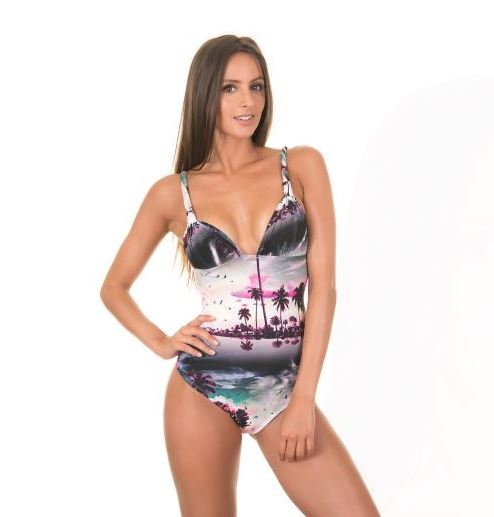
The one-piece: a guaranteed glamourous look
What the label does not tell you
Because monokini, one-piece and trikini are marketing words rather than defined categories, two swimsuits carrying the same label can behave completely differently in water. These are the things worth checking on the hanger, in order of how much trouble they cause later.
- The fastening. A halter neck you tie yourself is adjustable and stays put. A single decorative clasp at the back of the neck is the one that gives way at the worst moment.
- The cutouts. Cutouts at the waist are structural: they are where the suit will stretch first. Check the fabric there is doubled or bound rather than raw.
- The back. A deeply open back looks superb and rules out most sports bras’ worth of support. Decide which you care about.
- The lining. Pale fabrics without a full lining become transparent when wet. Hold the fabric up to the light in the shop, which feels ridiculous and saves an entire holiday.
- Embellishment. Stones, beads and metal rings look beautiful and corrode in salt water. Fine for a pool bar, poor for two weeks of swimming.
Choosing for the trip, not for the photograph
The honest way to pick swimwear is to ask what the holiday actually involves, because the answer changes the garment completely.
If the days are mostly horizontal, a lounger, a book and a swim before lunch, then the cut is a free choice and you should buy what you enjoy wearing. If the water is the point, and you are snorkelling, jumping off a boat or doing anything with a harness, a suit with adjustable ties and modest cutouts will spare you a running commentary in your own head. Anyone planning something airborne over the water, such as a parasailing session, should treat the fastening as a piece of equipment rather than a detail.
There is also the beach itself. On the pebble beaches of the French Riviera you will be sitting on hot stones rather than sand, so a one-piece with a lot of open panelling is a less comfortable proposition than it looks in the photograph. Sand forgives an open back. Hot stones do not.
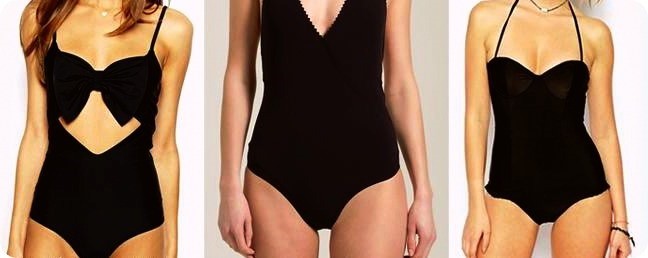
Let yourself be tempted by the black swimwear, symbol of elegance with new cuts
Sun, salt and the practical side
One number is worth carrying in your head. A fabric rated UPF 50+ blocks at least 98% of the ultraviolet radiation reaching it, and the Skin Cancer Foundation gives its recommendation to fabrics rated UPF 30 and above. Ordinary swimwear fabric is not automatically rated at all, so if you burn easily, a rash vest over whatever you have chosen does more for you than any cut.
Then there is looking after it. Chlorine and salt both attack elastane, and the fix is unglamorous: rinse the suit in cold fresh water as soon as you take it off, dry it flat in the shade rather than on a hot balcony rail, and never wring it out. A suit treated that way lasts several seasons. One left screwed up in a wet bag loses its shape in a fortnight.
One last thing that belongs in a travel article rather than a fashion one. Rules and habits around toplessness on beaches vary enormously between countries, and sometimes between two beaches an hour apart. It is worth a two-minute check for your destination before you go, particularly outside western Europe, where local law and local custom may not be the same thing at all.
Questions I get about this
Is a monokini the same thing as a trikini?
No, and neither term is standardised. Trikini is generally used for a suit made of separate pieces held together by ties or rings, so it reads as a two-piece with a connecting element. Both words are chosen by the seller, so read the photograph rather than the label.
Does a one-piece suit every body?
The cut suits everybody, which is not the same as saying every cut suits everybody. Bandeau tops need something to hold them up or a good tie. Deep cutouts sit differently depending on where your waist actually is. Try three shapes in the same size rather than one shape in three sizes.
Black or colour?
Black is easy, holds its shape visually and hides sun cream marks. Colour photographs better against blue water and shows wear faster. If you are only taking one, black is the safer traveller’s choice, which is dull advice and also correct.
Buy the thing you will actually swim in. The monokini started life as an argument about freedom on a beach in 1964, and somewhere between then and now it turned into a rail of cutout swimsuits with an interesting name. Both versions are fine. Just check the straps before you dive.
Last updated: August 2026. Historical details on the 1964 monokini follow published museum and fashion-history records. UPF figures are those defined by the standard textile ratings. Local rules on beach dress vary by country and should be checked for your own destination.
What survived your last beach holiday?
Tell us which swimsuit lasted the trip and which one gave up on day three. Honest reviews in the comments are worth more than any lookbook.