
Saint-Tropez sells itself on the jet set, and that is the least interesting thing about it. Rent a villa here with family or friends and what you actually get is a Provençal village with a Tuesday market, a coastal footpath leaving from the old fishing quarter, and a gulf full of quieter places to sleep.
Renting a villa in the gulf of Saint-Tropez works best when you stop insisting on the postcode. The village itself is small, expensive and busy in August. The surrounding communes give you the same beaches, the same light and considerably more space per euro, usually with a pool and a garden that a hotel could never match for a group. What matters far more than the address is what the rental contract includes, and whether the property is legally registered.
Before you book
- Ask for the property’s tourist rental registration number. From 20 May 2026 it is required nationwide.
- Check whether the tourist tax, cleaning and pool maintenance are inside the quoted price or on top of it.
- A pool is worth more than proximity to the sea in July and August. Parking matters almost as much.
- The market on the Place des Lices runs Tuesday and Saturday mornings, year round.
The gulf is bigger than the village
Saint-Tropez sits at the tip of a peninsula, inside a gulf that has grouped twelve communes into a single intercommunality since 1 January 2013. Beyond Saint-Tropez itself, that includes Ramatuelle, Gassin, Sainte-Maxime, La Croix-Valmer, Cavalaire, Cogolin, Grimaud, La Garde-Freinet, La Mole, Plan-de-la-Tour and Le Rayol-Canadel. Renting in one of them is not a consolation prize, it is usually the better trip.
| If you rent in | You are choosing |
|---|---|
| Saint-Tropez | Walking to the port and the market, paying the most, parking the worst |
| Ramatuelle and Gassin | Vineyards, hilltop villages, the Pampelonne side of the peninsula |
| Sainte-Maxime and Grimaud | Across the water, family beaches, the boat shuttle instead of the coast road |
| La Croix-Valmer and Cavalaire | The calmest end of the gulf, longer beaches, noticeably lower rents |
What the village actually is, underneath the myth
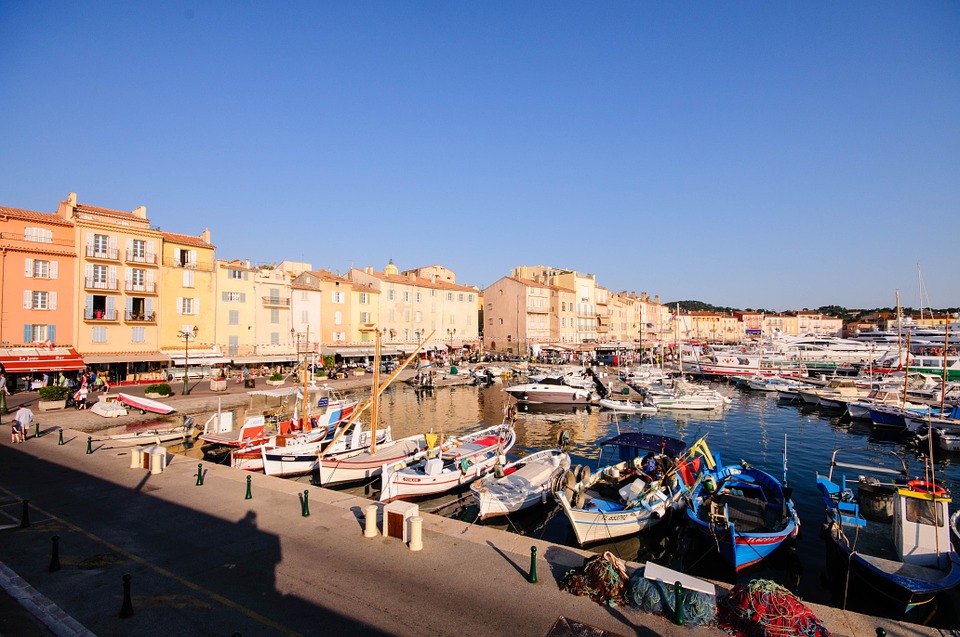
The artists got here long before the celebrities did. Paul Signac sailed his boat into the harbour in 1892, when this was still a working fishing village, and bought a house on the coast. The colony of painters that followed him is the real origin story of Saint-Tropez.
The 1950s brought the Paris crowd, Françoise Sagan and Jacques Prévert among them, and then Brigitte Bardot, whose 1956 film Et Dieu créa la femme turned a village into an international address. Pablo Picasso is often named in the same breath, though his Riviera years belong more to Vallauris, Cannes and Mougins than to this peninsula.
What survived all of it is the ordinary part. The market on the Place des Lices still runs on Tuesday and Saturday mornings, roughly 8am to 1pm, all year, with over a hundred stalls of fruit, cheese, olives, tapenade, flowers and the usual straw hats. Behind the port, the lanes are still narrow and still Provençal. And the sentier du littoral, the coastal footpath, starts at the Plage de la Ponche and runs around the peninsula past beaches you cannot reach by car.
What a summer villa should actually give you
A high-end villa earns its price on capacity, not on marble. Spacious bedrooms and several bathrooms are what make a house work for two families rather than one, and they are the first thing to count on a floor plan.
Take the swimming pool seriously, even with the sea ten minutes away. In July and August the beaches fill early and the coast road fills with them; the pool is what lets half your group stay put without anyone feeling short changed. Large gardens do the same job in the evening, and terraces with shade matter more than terraces with a view when the temperature holds into September.
Three practical questions save arguments later. Is the tourist tax, charged per person per night, included in the quote or added at check-in? Who pays for pool and garden maintenance during your stay? And how many cars can genuinely park on the property, because on-street parking on this peninsula in August is close to fiction.
The paperwork that protects you as a renter
This is the part that changed recently and that most holiday guides have not caught up with. The French law of 19 November 2024, known as the loi Le Meur, generalises a mandatory registration number for furnished tourist rentals across the whole country, with a national register due to be in place by 20 May 2026. Every listing must carry a unique thirteen digit number, and platforms are required to remove ads that do not display one. Undeclared rentals expose the owner to fines that can reach 5,000 euros.
For you as a traveller, that number is a free legitimacy check. A villa advertised in a tense zone like Saint-Tropez without a registration number is either behind on its paperwork or not what it claims to be, and asking the question costs you one message before you transfer a deposit.
Choosing well for a summer
Pick the commune for the trip you want rather than for the name on the road sign, then read the contract twice and the photographs once. The gulf rewards that approach: the same coastline, the same market mornings, the same evening light, at a price that varies enormously depending on which side of the water you sleep on. If you want to compare it with the rest of the coast first, our guide to three Riviera towns where renting a villa makes sense covers the alternatives.
Regulatory details and market days checked in August 2026. Rental rules, tourist tax rates and opening times change, so confirm them with the owner, the agency or the local tourist office before you book.
Rented in the gulf before?
Tell us which commune you chose, what the final bill looked like next to the advertised weekly rate, and whether you would go back. Readers plan their summers off each other’s numbers here.