
I went to Porquerolles once in August and spent most of the day queuing. I went back in January, walked the same trails for three hours and crossed four people. Same island, same light, and about a third of the price.
Winter is the season when the French Riviera stops performing and starts being a place people actually live in. The light holds, the climate stays mild, the islands and the coastal paths empty out, and you can be on a ski slope an hour and a half after leaving the seafront. What you give up is swimming weather and a few seasonal closures. That trade is worth making.
Quick takeaways
- The islands (Porquerolles, Port-Cros, Sainte-Marguerite, Saint-Honorat, Bendor, Les Embiez) are at their best out of season, and the boat crossings are far less crowded.
- Three ski resorts sit within roughly ninety minutes of Nice: La Colmiane, Valberg and Auron. Sea in the morning, snow in the afternoon is not a marketing line here, it is a Tuesday.
- February is the busiest month of the winter thanks to the Nice Carnival, the Menton Lemon Festival and the Mimosa Festival in Mandelieu-La Napoule. Book accommodation early for those two weeks.
- Check opening days before you travel: several museums and smaller sites cut their hours between November and March.
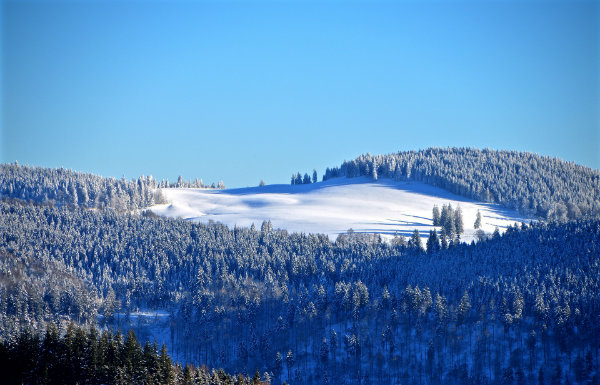
The winter season in the French Riviera
- 1 The islands are finally yours
- 2 Museums, for the two or three grey afternoons you will get
- 3 Walking season, not swimming season
- 4 Three ski resorts, and how far they really are
- 5 The Mercantour, up behind all of it
- 6 Christmas markets, then the festival fortnight
- 7 What winter here does not give you
- 8 Before you book
The islands are finally yours
The islands off this coast are the clearest argument for coming in the cold months. Porquerolles, with its beaches and its hiking network, is a genuinely different island once the day-trippers stop arriving by the thousand. Same for Port-Cros, where the whole point is walking quietly through a protected landscape rather than fighting for a patch of sand.
On Saint-Honorat you visit the monastery and the vineyards the monks still work. Off Cannes, Sainte-Marguerite carries the story of the Man in the Iron Mask, held there for eleven years, and out of season the birdlife takes over: grebes, gulls, great egrets and grey herons along the shoreline.
Bendor sits 150 metres off Bandol and is the strangest of the group, with its brightly painted houses and the population of pink marble statues that Paul Ricard installed from the 1950s onwards. His oceanographic institute is on the neighbouring island of Les Embiez, housed in a former Napoleonic fort. Neither island takes a full day. Both are much better without a summer queue for the shuttle.
Museums, for the two or three grey afternoons you will get
The Riviera has an unusually dense museum map for a coastline this size, and winter is when you finally have room to look at the walls. Start in Nice with the Matisse Museum, at 64 avenue des Arènes de Cimiez, which holds a major collection of the painter alongside other European and American artists.
The Marc Chagall National Museum, on avenue Docteur Ménard in Nice, is the one I recommend to families: it runs a creative trail and activities designed for children from around five, plus talks aimed at adults. Its café, set in a Mediterranean garden of olive trees, cypresses and pines, is a quietly excellent place to lose an hour.
In Biot, better known for its glassworks, the Fernand Léger National Museum on Chemin du Val de Pôme covers the painter’s whole arc from his early canvases to the monumental decorative work. For something less expected, the Musée d’Art Naïf Anatole Jakovsky occupies the Château Sainte Hélène in Nice and is reachable on tram line 2, Fabron stop. Antibes has its Picasso Museum looking straight out at the sea.
Two more worth the detour. The Palais Lascaris in Nice, whose origins go back to 1648, is all gilding, painted ceilings and period furniture, and holds one of Europe’s most important collections of antique musical instruments. It is at 15 rue Droite, tram line 1 (Cathédrale Vieille Ville or Garibaldi) or line 2 (Garibaldi Le Château). Then the Oceanographic Museum of Monaco, on avenue Saint Martin, with thousands of species across around ninety tanks and a dedicated space telling the odyssey of sea turtles.
Walking season, not swimming season
This is the part visitors underestimate. Winter is the best hiking window on the Riviera, because the same trails that are unbearable at thirty degrees are perfect at fourteen.
The Honoré d’Estienne d’Orves departmental park sits inside Nice itself, climbing to the top of the Corniche de Magnan with the Baie des Anges below. The Jardin des Arènes de Cimiez gives you century-old olive trees and an easy stroll. Higher up, footpaths through umbrella and Aleppo pines, carob and wild olive, orchids and irises lead to Mont Boron and the Fort du Mont Alban at 223 metres, where the view over the Baie des Anges is the payoff.
West of there, the Esterel Natural Park is the one people photograph: red volcanic rock, 959 hectares between Mandelieu-La-Napoule and Théoule-sur-Mer, lavender from the Maures and the occasional wild orchid. Terns and gulls work the coast, and among the yellow broom you may find Hermann’s tortoise, the last wild land tortoise species in France. Routes go up Mont Saint Martin, the Rocher des Monges, the Petites et Grosses Grues, or across to the old Maure Vieille volcano.
Nearby at Théoule-sur-Mer, the Pointe de l’Aiguille park drops its red rock straight into the water, with cliff paths and a belvedere over the whole Gulf of La Napoule. Inland, the Parc naturel départemental de la Valmasque spreads 561 hectares across Valbonne and Mougins, with discovery trails, pine and oak forest, the lotus pond at Fontmerle and marked mountain bike tracks. Beside Sophia-Antipolis, on the communes of Valbonne and Biot, the 638 hectares of the La Brague nature park follow the river, where moorhens, ducks, woodcock and herons are all in play. About 20 km from Nice, the climb to Mont Macaron at 806 metres suits hikers and mountain bikers alike, and near Châteauneuf-Villevieille you pass the ruins of the old village, abandoned in the seventeenth century.
Three ski resorts, and how far they really are
You can ski here, and the drive is genuinely short. The figures below are those published by the resorts and by the regional tourism sites at the time of writing, in August 2026. Re-check them before you commit: lift counts and open kilometres shift from one season to the next.
| Resort | From Nice | Altitude | Ski area |
|---|---|---|---|
| La Colmiane (Valdeblore) | About 1 h | 1 400 to 1 800 m | Around 30 km, 18 runs |
| Valberg | About 1 h 15 | 1 500 to 2 066 m | Around 90 km of runs |
| Auron | About 1 h 30 | 1 600 to 2 452 m | Around 135 km, 43 runs |
La Colmiane is the small, friendly one, and it also has France’s longest zip line: 2,663 metres in two sections, 1,879 m from the top of the Pic chairlift to an intermediate platform and 787 m down to the resort, with a drop of close to 300 metres and speeds that reach 130 km/h. In winter, a cart system lets skiers send their gear ahead and pick it up at the bottom.
Valberg covers the communes of Guillaumes, Péone and Beuil and is the most complete of the three, with a snow park, cross-country loops, a covered heated pool and snowshoe trails. Auron is the biggest ski area and the one to pick if you actually want to ski hard, sitting at the gateway to the Mercantour. And after a day out in that air, a fondue or a raclette with a glass of mulled wine is not a cliché, it is simply the correct decision.
The Mercantour, up behind all of it
The Mercantour National Park is the reason this coast has real mountains behind it rather than hills. Its protected core covers around 68,000 hectares across two departments, and the park authority counts 78 mammal species, including all six wild ungulates found in France, plus 199 bird species. Ibex, chamois and bearded vultures are now observed regularly in places where they had all but vanished.
You will not see everything in a day, and honestly you might see nothing. That is how wildlife works. Go early, go quietly, and treat any sighting as luck rather than an itinerary item.
Christmas markets, then the festival fortnight
The winter calendar here has two distinct halves. December belongs to the Christmas markets. Cannes traditionally opens the season from late November, followed in early December by Cagnes-sur-Mer, Monaco, Nice and Menton, then Antibes around mid-December, with the magic stretching into January. Nice runs the largest village of the lot: roughly sixty food and craft chalets, a big wheel, an open-air ice rink, a life-size nativity scene with automatons, free afternoon shows and even open-air cinema evenings. Saint-Tropez does the same in its own register, with illuminations, decorated windows honouring Provençal traditions all through December, an ice rink, carriage rides and gourmet chalets.
Then comes February, and the coast throws its three big parties at once.
The Nice Carnival
One of the largest carnivals in the world, with giant floats along the seafront, hundreds of costumed dancers and musicians, and the flower battles where about twenty floral floats throw thousands of stems into the crowd. Each year the King takes the keys of the city on place Masséna, and at the end his chariot burns. The 2026 edition ran from 11 February to 1 March on the theme “Vive la Reine !”. Dates and themes change annually, so confirm the current programme before booking.
The Menton Lemon Festival
Menton was once Europe’s leading lemon producer, and the parade of citrus-covered floats that grew out of that history in the 1920s is still unlike anything else on the coast. Expect around a fortnight of daytime parades, evening illuminations and fireworks, plus the sculpted citrus gardens. The 92nd edition took place from 14 February to 1 March 2026, on the theme “The wonders of life”.
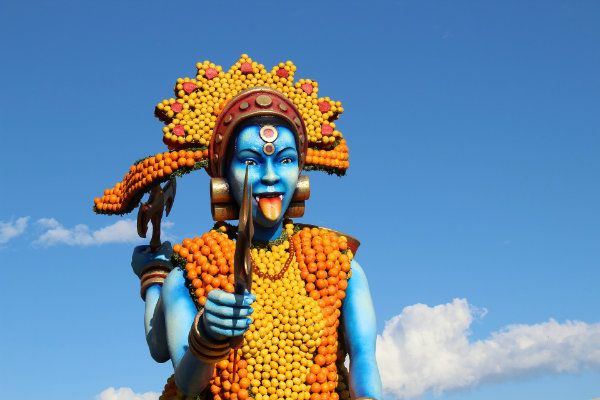
The lemon festival in Menton is fabulous to see.
The Mimosa Festival
Mandelieu-La Napoule, on the seafront south of Nice and a short hop from Cannes, has celebrated its mimosa every February since 1931. The tree arrived in the region in 1839 from Australia and went on to make the local fortune. Local growers still supply the flowers for the floats and the flower battles, and the hills between Bormes-les-Mimosas and Grasse, passing through Mandelieu, turn yellow and fragrant for weeks whether or not you go anywhere near the parade.
What winter here does not give you
I would rather say this plainly than sell you a postcard. The sea is cold, averaging around 13 to 14 degrees off Nice in February according to sea temperature records, so swimming is for the stubborn. Some beach restaurants and smaller seasonal sites close from November to March, and a few museums cut their opening days. The mistral can make a bright day feel genuinely raw on an exposed corniche. And during the February festival fortnight, hotel prices in Nice and Menton climb close to summer levels.
None of that changes the maths. You still get the light, the mountains, the empty trails and a coastline that behaves like itself. If you want the same region with the sea warm, read the reasons to take a holiday in Nice at the other end of the calendar and compare. And if you want a base inland rather than on the water, Mougins is fifteen minutes from the Cannes beaches and stays open all winter.
Before you book
Rent for the week rather than the weekend. Out of season, renting a villa in Nice or in the hills behind it costs a fraction of the July rate, and having a kitchen matters more in winter than in August. Take proper walking shoes, one warm layer more than you think, and sunglasses, because the light on this coast in January is ridiculous. Check opening days for anything you are planning your trip around, and if February is your window, book accommodation well before the carnival and lemon festival dates are announced rather than after.
Last updated: August 2026. Event dates, resort figures and opening hours change every season, so verify them with the organisers or the local tourist office before you travel.
Been here in winter?
Tell us which month you picked and what was open. Our readers plan their trips off each other’s real experience, not off brochures.